Retractable Privacy Screens for Pennsylvania Patios: What to Know Before You Buy

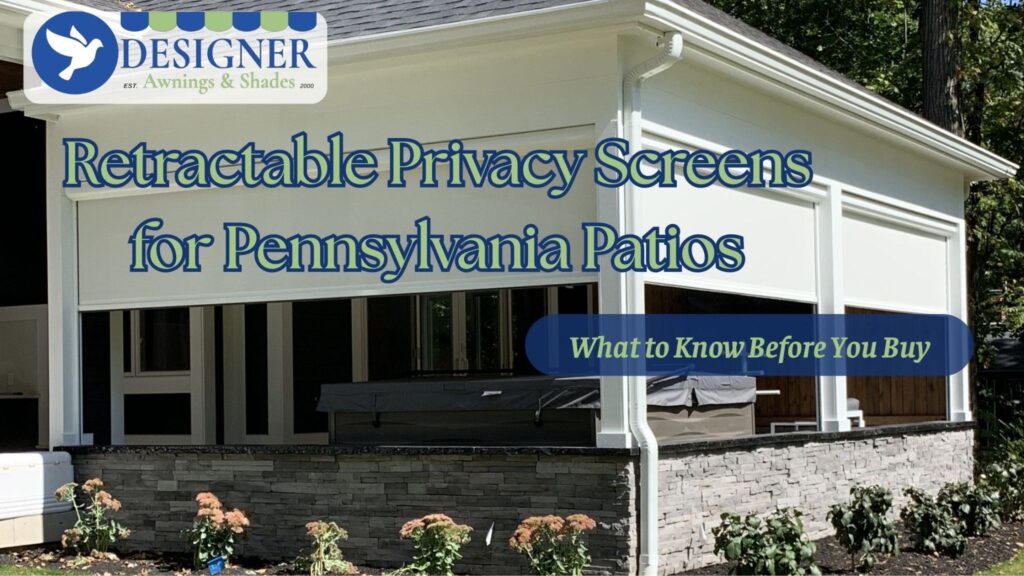
If your patio sits unused for hours each day because the afternoon sun makes it uncomfortable, or you find yourself heading inside earlier than you’d like because of insects or a lack of privacy, a retractable screen system may be worth a serious look. Unlike permanent enclosures or fixed structures, retractable screens let you adjust how much protection you want based on the conditions — lower them when you need shade, insect control, or visual privacy, and retract them fully when the weather is ideal and you want the yard open.
Pennsylvania homeowners across the Lehigh Valley deal with a specific combination of outdoor challenges: humid summers, unpredictable springs, and significant temperature swings from late afternoon into evening. Outdoor spaces that go unused because of these conditions represent real lost value, especially when a relatively targeted upgrade can extend comfortable use by weeks on either side of summer.
What Retractable Privacy Screens Actually Address
The appeal of a retractable screen usually starts with one specific frustration. Someone avoids the patio between 2 p.m. and 6 p.m. because of direct afternoon sun. Or the family stops eating outside in June because the insects are too persistent. In practice, though, the benefit of a well-chosen screen tends to reach beyond the original complaint.
A patio with clearly defined edges and protection from the elements simply feels different than one that’s fully exposed. There’s a reason certain outdoor spaces get used regularly while others, despite nice furniture and a good layout, sit empty most of the season. Screens provide definition — they give the space a sense of enclosure without making it feel closed off.
Here’s a breakdown of what quality retractable patio screens can do for a covered porch or patio:
- Glare and UV reduction: Solar mesh fabrics filter direct light and block UV rays, which also helps prevent patio furniture from fading over time.
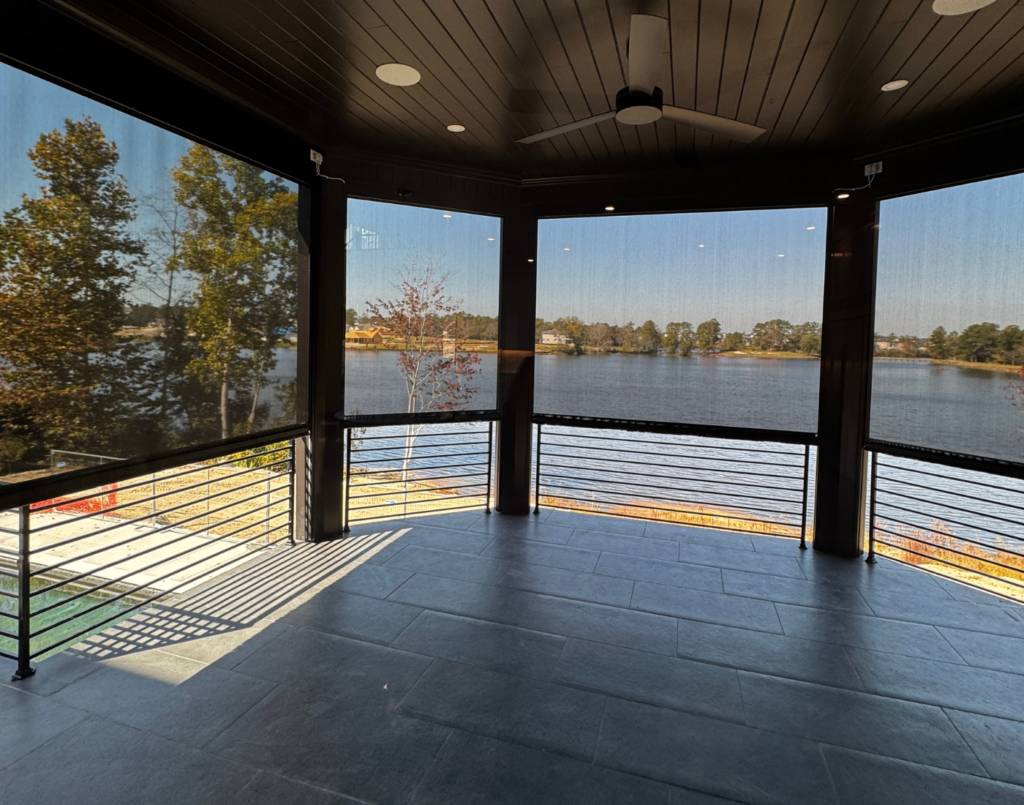
- Insect control: Bug screen fabric keeps mosquitoes, flies, and other insects out while allowing airflow to continue through the space.
- Visual privacy: Opaque fabric options create a physical barrier between your patio and neighboring yards or street-facing views.
- Temperature moderation: Blocking direct sun on a covered patio can noticeably reduce the felt temperature during peak afternoon hours.
- Wind buffering: Depending on fabric density and mounting style, screens can reduce the effect of consistent wind on an otherwise exposed patio.
- Furniture and flooring protection: Regular UV exposure accelerates fading and material breakdown in outdoor furniture, rugs, and composite decking.
That last point often goes unmentioned in conversations about screen systems, but it’s relevant to the long-term cost of maintaining an outdoor space. A fabric that filters UV also protects the furnishings behind it.
Why the Specifics of Pennsylvania Matter
Outdoor comfort in Pennsylvania doesn’t follow a clean seasonal pattern. The Lehigh Valley and surrounding counties can see temperatures in the 90s during July and August, followed by cool, dry evenings that are genuinely pleasant — if you can get through the hot part of the day. Spring and fall often offer the best outdoor conditions, but those seasons also bring insects, pollen, and variable weather that can keep homeowners from using the space.
Retractable screens occupy a practical middle ground. They extend the usable hours of a patio without committing to a permanent enclosure, and they don’t require structural changes to the home. For homeowners who want more comfort and control without a major construction project, they’re a sensible option.
Designer Awnings, based in Allentown and serving homeowners and businesses across Berks, Lackawanna, Monroe, Luzerne, Carbon, Northampton, Schuylkill, and Lehigh Counties, has been installing custom shade and screen systems for over 25 years. As an authorized Sunesta dealer, they offer custom retractable privacy screens built to individual specifications rather than off-the-shelf sizes.
Ready to See What’s Right for Your Space?
Before choosing between screen systems or fabric types, talking through the specifics of your patio with a knowledgeable installer makes a difference. Contact Designer Awnings to schedule a free in-home estimate — there’s no obligation, and the conversation will help you understand which options are actually suited to your space.
Two Retractable Screen Systems Worth Comparing
Designer Awnings works exclusively with Sunesta products, which means every screen installed is custom-manufactured to order. There are two primary options designed for residential patios and porches.
The Sunesta Sentry: Versatile Across Many Applications
The Sentry retractable screen is built to cover windows, doors, patios, and lanais, and it’s available in a range of fabric types and mounting configurations that make it adaptable to most residential spaces. Each unit is custom-built up to 18 feet wide with a 12-foot drop.
Mounting options — surface mount, inside mount, distance mount, and recessed mount — allow the Sentry to fit the physical constraints of most covered porches without requiring changes to the structure. Frames are available in five colors: white, beige, clay, brown, and bronze, which gives the screen a cleaner visual fit against most home exteriors.
The Sentry comes motorized as standard, with wireless remote operation. The captured edge rail system keeps the fabric sealed and prevents binding during operation, including under mild wind conditions. This detail matters more than it might seem — a screen that rattles in the wind or lifts at the edges stops doing its job and becomes something homeowners work around rather than use.
Fabric choices include bug screen for insect control with continued airflow, solar mesh that reduces light and heat while preserving a view outward, opaque fabrics for stronger privacy and light control, and clear vinyl panels for near-complete weather protection. The fabric you choose ultimately determines how the screen functions day-to-day, so it deserves careful thought before the order is placed.
The Sunesta Sunroll: Focused on Solar Control
The Sunroll addresses a more specific problem: sun control for covered outdoor spaces. If a covered patio gets low-angle afternoon light that comes in at the sides or a particular opening gets intense direct sun for several hours, the Sunroll is built for that application.
Available in both manual and motorized versions, the Sunroll can be custom-built up to 20 feet wide by 12 feet tall, making it suitable for larger covered patio openings. The Sunroll can be configured as a free-hanging unit with a weighted bar, or set up on a rod or cable system to reduce movement in breezy conditions.
Storage and protection options include an aluminum hood with a weather seal that helps protect the fabric when retracted. For easier maintenance access, the optional Sunroll SmartCase can also be added. Frame colors include white, beige, clay, and brown, which makes it easier to match existing awnings or trim across the Sunesta product line.
One notable feature is the fabric selection. Designer Awnings offers more than 190 colorfast acrylic fabrics in striped and solid designs, along with a range of shade fabric styles. This breadth is worth mentioning because fabric choice in a screen system affects not just function but how the product reads visually from the street, from neighboring yards, and from inside the home looking out.
Choosing the Right Fabric
Fabric selection is where many of the most important functional decisions in a screen project happen. While dimensions, mounting, and motorization all matter, the fabric is what shapes the daily experience.
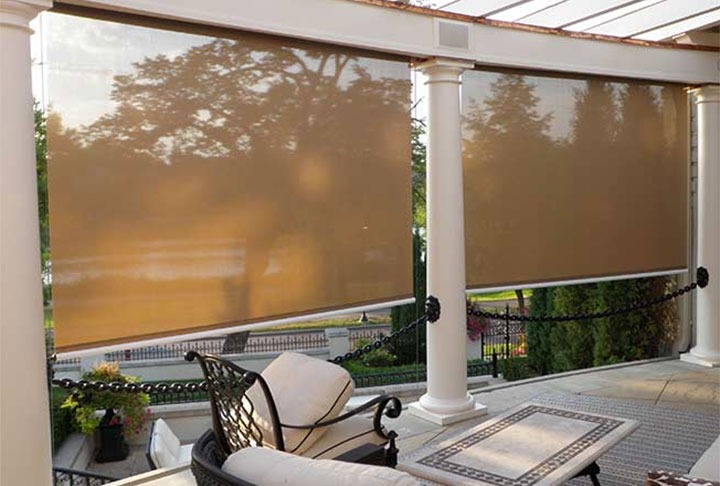
Opaque fabrics deliver the most privacy and the most effective light control. They’re the right choice when the goal is to create a true visual separation between your outdoor space and an adjacent property, or when afternoon glare is severe enough that filtered light isn’t sufficient. The tradeoff is that you lose the outward view when the screen is deployed.
Solar mesh fabrics allow more light to filter through, maintain a degree of outward visibility, and keep the space feeling open while still reducing heat and UV exposure. They work well on patios that don’t face direct neighbor sightlines, or where the view to the yard is part of what makes the space worth spending time in.
The right choice depends on how the patio is oriented, what’s visible on the other side of the screen, and how the household uses the space. These are the specific questions that Designer Awnings’ shade specialists work through during a free in-home estimate — because a well-matched fabric makes the difference between a screen that gets used every day and one that stays in the same position for weeks.
Motorized vs. Manual Operation
Manual screens work fine in certain contexts, particularly smaller openings or screens that don’t need to be adjusted frequently. For a primary outdoor living space, however, motorized operation tends to deliver better results in practice.
The reason is straightforward: a screen that’s easy to deploy gets deployed. When adjusting the screen requires walking over, locating a crank, and operating it manually, many homeowners leave it in whatever position it was last set and stop thinking about it. A motorized screen with a wireless remote gets adjusted throughout the day as conditions shift — when the sun angle changes, when guests arrive, when the kids want the yard fully open. That responsiveness is where the practical value lives.
Both the Sentry and the Sunroll are available with wireless remote operation. The Sunroll can also be fitted with auto sensors, which adjust screen position automatically based on sun conditions. For households that want a system that responds to conditions without requiring manual intervention, the motorized option is the one to choose.
What to Expect from Designer Awnings
Every screen installed by Designer Awnings is custom-manufactured to the specific dimensions of your opening, with the fabric and frame color chosen for your space and the mounting configured for your home’s structure. Each order comes with a unique identification number so you can track its progress through manufacturing and delivery — a useful feature for a custom product that goes through a full production process.
As a family-owned, locally operated business, Designer Awnings doesn’t route customers through call centers. The team that handles your consultation and installation is the same team you’ll reach if you have questions later. Every Sunesta product comes backed by a warranty covering the frame, fabric, and motor, which means the investment is protected well beyond installation day.
If you’re comparing retractable awnings and screens more broadly, or want to see the range of fabric options available, those pages are worth a look before your estimate appointment — coming in with a sense of what you like makes the conversation more productive.
Request a Free Estimate
Designer Awnings offers free in-home estimates across Berks, Lackawanna, Monroe, Luzerne, Carbon, Northampton, Schuylkill, and Lehigh Counties. Schedule yours here and a shade specialist will walk through your space, discuss your priorities, and help you identify the screen system and fabric that fits your patio and your household’s habits.